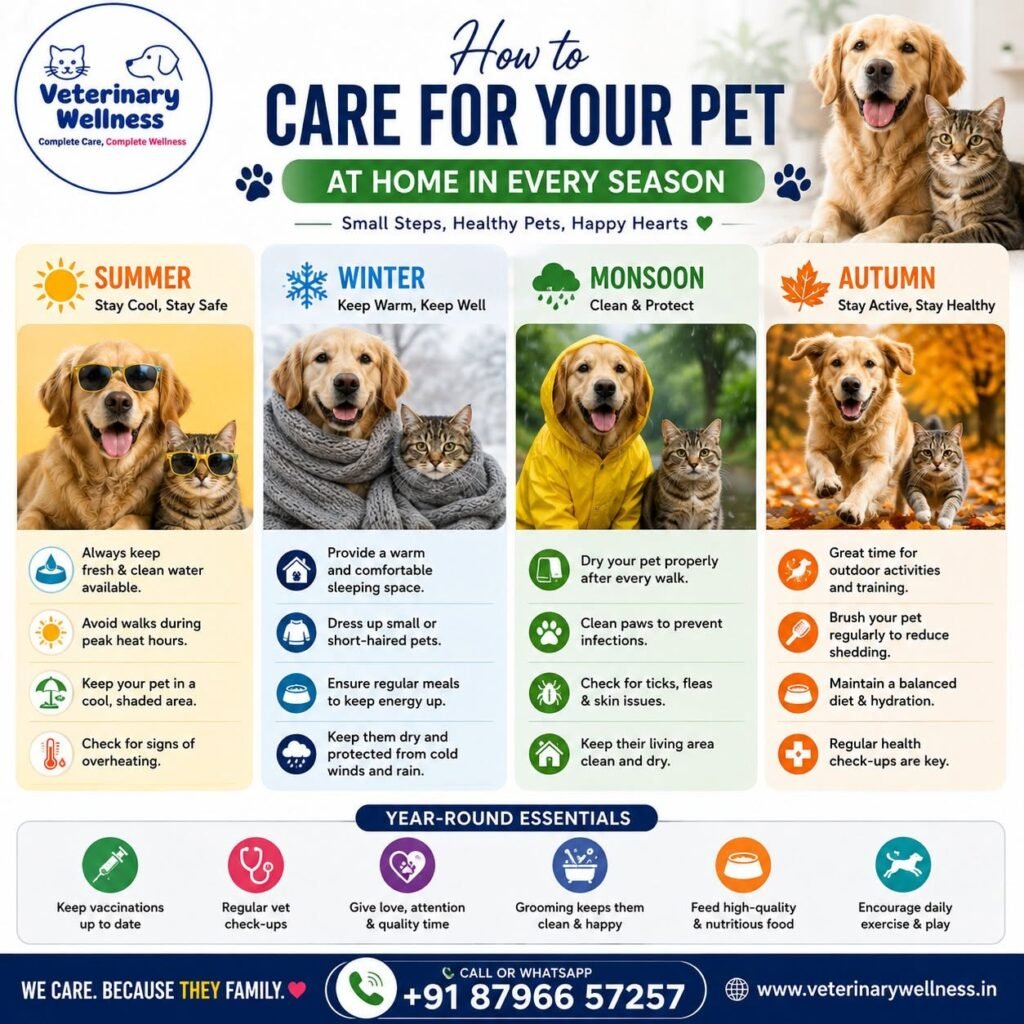
How to Care for Your Pet at Home in Every Season
Your pet's needs change with the weather. Learn how to maintain proper nutrition, hydration, grooming, exercise, hygiene and preventive healthcare throughout the year with practical seasonal pet-care tips.
Published by Veterinary Wellness | Pet Healthcare & Wellness Guide
Caring for a pet at home is about more than providing food and shelter. Dogs and cats need regular attention to their comfort, hygiene, nutrition, activity levels and overall health. Seasonal changes can affect their skin, coat, appetite, energy and exposure to parasites.
A consistent home-care routine, combined with professional veterinary check-ups, helps pet parents identify changes early and support their companion's long-term wellbeing. At Veterinary Wellness , we focus on preventive healthcare, personalized treatment and compassionate care for dogs and cats.
Table of Contents
Year-Round Pet Care Essentials
Some aspects of pet care remain important regardless of the season. A clean living environment, balanced nutrition, regular activity and preventive healthcare form the foundation of a healthy lifestyle.
- Provide fresh drinking water every day.
- Feed a balanced diet appropriate for your pet's age and needs.
- Maintain a clean, comfortable and safe sleeping area.
- Keep vaccinations and parasite prevention up to date.
- Brush your pet's coat regularly and check for skin problems.
- Provide age-appropriate exercise and mental stimulation.
- Monitor changes in appetite, behaviour, weight or activity.
- Schedule routine veterinary wellness examinations.
Summer Pet Care Tips
Hot weather can increase the risk of dehydration, overheating and heat-related illness. Pets may also experience changes in appetite and activity during warmer months.
Keep Your Pet Hydrated
Keep fresh water available throughout the day. Place water bowls in accessible areas and check them regularly, especially during hot weather.
Avoid Peak Heat
Plan walks and outdoor activities during cooler parts of the day. Avoid prolonged exercise in direct sunlight.
Protect Paws
Hot pavement can burn paw pads. Check the walking surface before taking your pet outdoors and choose cooler routes when possible.
Never Leave Pets in Cars
A parked vehicle can become dangerously hot very quickly. Never leave your pet unattended inside a vehicle.
Watch for Signs of Overheating
Excessive panting, weakness, drooling, vomiting, confusion or collapse can be signs of a serious heat-related problem. Move your pet to a cooler area and contact a veterinarian immediately if you notice concerning symptoms.
Learn more about professional pet care services in Gurgaon for personalized wellness guidance.
Monsoon Pet Care Tips
Rainy weather can create damp conditions that affect your pet's skin, coat and living environment. Increased moisture and outdoor exposure may also require extra attention to hygiene.
Keep Fur Dry
Dry your pet thoroughly after walks in the rain. Pay attention to paws, ears and areas where moisture can remain trapped.
Maintain Clean Bedding
Wash and dry bedding regularly. Damp bedding can become uncomfortable and may contribute to skin irritation.
Check for Parasites
Inspect your pet's coat after outdoor activities and follow your veterinarian's recommended parasite-prevention plan.
Prevent Unsafe Water Exposure
Avoid allowing pets to drink from stagnant water or contaminated outdoor sources. Provide clean drinking water at home.
Monsoon Hygiene Checklist
- Clean muddy paws after outdoor walks.
- Keep food and water bowls clean and dry.
- Check ears for unusual odour, redness or discharge.
- Look for persistent itching, hair loss or skin irritation.
- Maintain a dry and well-ventilated sleeping area.
Winter Pet Care Tips
Cooler weather can affect pets differently depending on their coat, age, size and health condition. Puppies, kittens, senior pets and pets with certain medical conditions may need additional care.
Provide a Warm Sleeping Area
Keep your pet's bed away from cold drafts and damp floors. Use comfortable bedding suitable for the weather.
Continue Regular Exercise
Maintain daily activity while adjusting the duration and timing of walks according to the temperature and your pet's comfort.
Care for Skin and Coat
Cold, dry air may contribute to dry skin. Regular brushing and appropriate grooming help maintain coat health.
Monitor Older Pets
Senior pets may experience changes in mobility or comfort during colder weather. Discuss any concerns with your veterinarian.
Avoid making sudden changes to your pet's diet or exercise routine. If your pet has a medical condition, ask your veterinarian about appropriate winter-care adjustments.
Spring Pet Care Tips
Spring is a good time to refresh your pet's grooming routine, review preventive healthcare and prepare for increased outdoor activity.
- Schedule a routine wellness check-up if due.
- Review vaccination and deworming requirements.
- Check your pet's coat and skin after outdoor activities.
- Gradually increase exercise if activity was reduced during winter.
- Keep grooming tools, bedding and feeding areas clean.
- Discuss seasonal parasite prevention with your veterinarian.
Regular wellness examinations can help identify health concerns early and support a personalized care plan. Explore veterinary services in Gurgaon for professional healthcare support.
Nutrition and Hydration for Every Season
A balanced diet supports your pet's energy, growth, immune function and overall wellbeing. Feeding needs may vary depending on age, activity level, body condition and health status.
Practical Feeding Tips
- Choose food appropriate for your pet's life stage.
- Follow feeding guidance and avoid unnecessary overfeeding.
- Keep fresh water available at all times.
- Avoid giving foods that are unsafe for pets.
- Discuss weight changes or appetite loss with a veterinarian.
- Do not introduce major diet changes without proper guidance.
If your pet has allergies, digestive problems, obesity or another medical condition, a veterinarian can help develop an appropriate nutrition and care plan.
Seasonal Grooming and Hygiene
Grooming is an important part of home pet care. It helps maintain coat cleanliness, supports comfort and allows pet parents to notice changes in the skin, ears, paws or nails.
- Brush your pet according to its coat type.
- Keep nails trimmed to a comfortable length.
- Check ears regularly for unusual changes.
- Clean paws after outdoor activities.
- Use pet-safe grooming products.
- Seek professional grooming support when needed.
Veterinary Wellness provides professional pet grooming and wellness services for dogs and cats.
Preventive Healthcare: The Most Important Year-Round Step
Preventive healthcare helps support your pet's long-term health. Routine check-ups, vaccinations, parasite prevention and timely medical attention are important parts of responsible pet ownership.
Keep Vaccinations Up to Date
Vaccination schedules depend on your pet's age, vaccination history, lifestyle and veterinary recommendations. Do not skip scheduled vaccinations without discussing it with your veterinarian.
Learn more about pet vaccination services in Gurgaon .
Follow Parasite Prevention Guidance
Fleas, ticks and intestinal parasites can affect pets throughout the year. Ask your veterinarian about a suitable prevention plan based on your pet's lifestyle and local conditions.
Schedule Routine Health Check-Ups
Regular veterinary examinations help monitor your pet's overall health and identify potential concerns early. Puppies, kittens, senior pets and pets with ongoing medical conditions may require more frequent monitoring.
Consult a veterinary physician in Gurgaon for personalized preventive healthcare guidance.
When to Contact a Veterinarian
Home care is useful for maintaining your pet's daily wellbeing, but it should not replace professional medical treatment when your pet is unwell.
Contact a veterinarian promptly if your pet shows:
- Difficulty breathing or severe weakness.
- Collapse, seizures or sudden loss of consciousness.
- Repeated vomiting or severe diarrhoea.
- Suspected poisoning or ingestion of a harmful substance.
- Serious injury, bleeding or inability to walk.
- Persistent loss of appetite or unusual behaviour.
- Signs of severe pain or sudden deterioration.
Veterinary Wellness provides veterinary healthcare and emergency support for dogs and cats.
Conclusion
Caring for your pet in every season requires consistency, observation and a few practical adjustments. Keep your pet hydrated, provide a comfortable environment, maintain hygiene, follow preventive healthcare recommendations and monitor changes in behaviour or health.
A reliable home-care routine, combined with regular veterinary guidance, helps your pet stay comfortable and healthy throughout the year. If you have concerns about your pet's health, consult a qualified veterinarian for advice tailored to your companion.
Need Professional Pet Care in Gurgaon?
Veterinary Wellness provides compassionate veterinary care, preventive healthcare, vaccinations, grooming, diagnostics and treatment support for dogs and cats.
Visit Our Website Call +91 87966 57257Contact Veterinary Wellness
Address: 716, 7th Floor, ILD Trade Centre, Near Subhash Chowk, Sector 47, Gurgaon, Haryana - 122018
Phone: +91 8796657257
Alternate Phone: +91 9782763127
Email: info@veterinarywellness.in
Website: veterinarywellness.in
Frequently Asked Questions
How can I care for my pet at home throughout the year?
Provide fresh water, balanced nutrition, regular exercise, grooming, a clean living environment and preventive healthcare. Adjust your pet's routine according to the season, age and individual health needs.
What are the most important summer pet-care tips?
Keep your pet hydrated, avoid peak heat, provide a cool resting area and never leave your pet unattended in a parked vehicle. Contact a veterinarian if you notice signs of overheating.
How should I care for my pet during the monsoon?
Keep your pet's coat and paws dry, maintain clean bedding, provide safe drinking water and follow your veterinarian's parasite-prevention recommendations.
Do pets need special care during winter?
Pets may need a warm sleeping area, comfortable bedding and adjustments to outdoor activity. Puppies, kittens, senior pets and pets with medical conditions may require additional care.
How often should I groom my pet?
Grooming frequency depends on your pet's breed, coat type, lifestyle and health. Regular brushing, nail care and hygiene checks are important throughout the year.
Why is preventive veterinary care important?
Preventive care helps support long-term health through routine examinations, vaccinations, parasite prevention and early identification of potential health concerns.
When should I take my pet to a veterinarian?
Contact a veterinarian for serious injury, breathing difficulty, suspected poisoning, collapse, seizures, severe weakness or other concerning symptoms. Routine visits are also important for preventive healthcare.
Where can I get professional pet care in Gurgaon?
Veterinary Wellness provides veterinary consultations, preventive healthcare, vaccinations, grooming, diagnostics and treatment support for dogs and cats in Gurgaon. Visit veterinarywellness.in to learn more or book an appointment.